
I remember the first time I attempted home pickling and realized how fascinating the pickling process could be. My curiosity about fermented vegetables pushed me to experiment with salt brine and traditional methods used in Jewish cuisine. That exploration introduced me to deli staples, pickle jars, and a surprisingly complex sour taste profile.
In this guide, I will show exactly how I make authentic half sour pickles at home using natural fermentation and careful vegetable fermentation techniques. I will explain my home pickling workflow, the brining solution I trust, and the kitchen equipment I rely on. I will also share pickle making tips that improve flavor profiles and preserve cucumber freshness.
How to Make Half Sour Pickles
When I prepare half sour pickles, I always begin with extremely fresh cucumbers because crisp texture is essential. I learned that cucumber varieties used for pickles respond best to salt brine fermentation with dill, garlic, and spices. This fermentation method creates crunchy pickles with a mild sour taste rather than the intense acidity found in full sour pickles.
Half Sour Pickle Recipe
My process relies on a balanced brine made from water, kosher salt, and pickling spices. The cucumbers sit submerged in jars while natural fermentation begins. During this food preservation process, beneficial bacteria transform the vegetable sugars, creating fermented foods rich in probiotics and the signature half sour flavor.
| Pickle Type | Fermentation Time | Flavor | Texture |
|---|---|---|---|
| Half Sour Pickles | 24–48 hours | Mild sour | Crunchy |
| Full Sour Pickles | 5–7 days | Strong sour | Firm |
| Refrigerator Pickles | No fermentation | Vinegar tang | Crisp |
Half Sour Pickles Recipe
When I share my half sour pickles recipe, I focus on simple ingredients and traditional food preservation techniques. Fresh cucumbers, dill, garlic cloves, and spices create the classic Jewish deli taste. The salt and water brine encourages fermentation while preserving vegetables naturally without heavy vinegar.
This homemade recipe produces crunchy pickles with balanced flavor and refreshing sour taste. I usually prepare these pickles as a snack, condiment, or side dish alongside deli food. The quick fermentation process keeps the cucumbers bright while still delivering probiotic benefits common in fermented vegetables.
Ingredients
When I assemble ingredients for half sour pickles, I prioritize fresh produce and aromatic herbs. Crisp cucumbers, dill weed, garlic cloves, kosher salt, and clean water create the foundation for a reliable brining solution. Pickling spices such as peppercorns and mustard seeds add depth to the flavor profile.
The balance between salt, water, and spices determines how the fermentation behaves. I’ve tested many ratios while preserving vegetables, and the traditional salt brine always works best. Using high-quality cucumbers and herbs helps maintain crunchy texture while encouraging natural fermentation during pickle making.
| Ingredient | Amount |
|---|---|
| Pickling Cucumbers | 1 pound |
| Water | 2 cups |
| Kosher Salt | 1 tablespoon |
| Dill Weed | 2 sprigs |
| Garlic Cloves | 3 cloves |
| Pickling Spices | 1 teaspoon |
Instructions
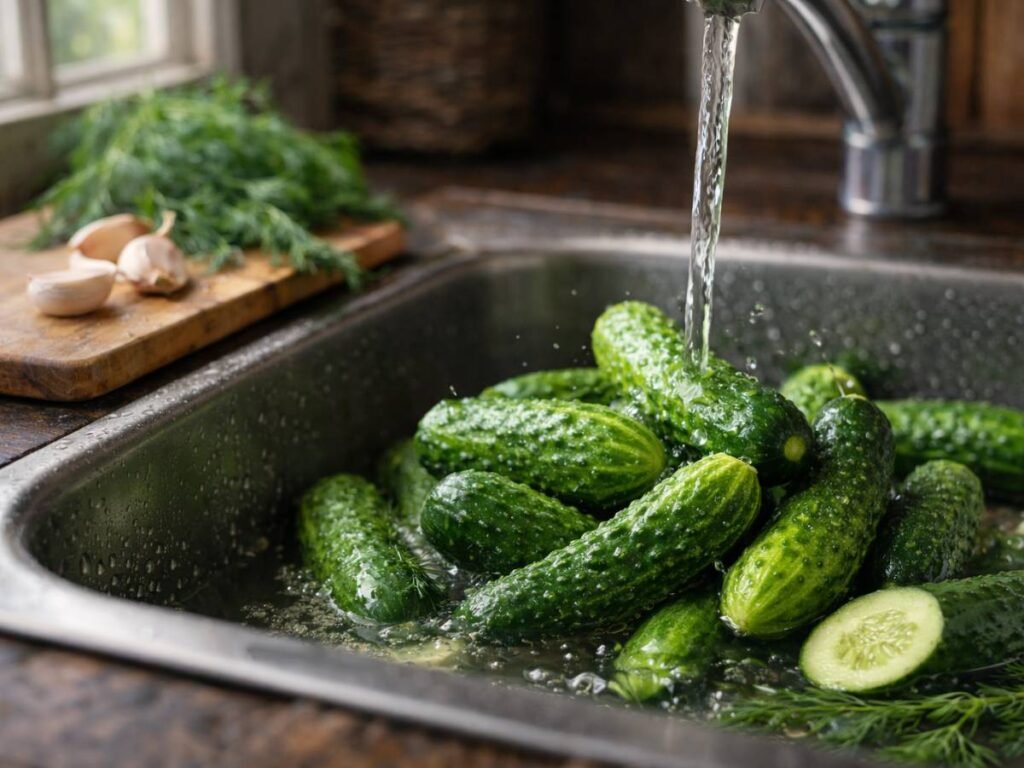
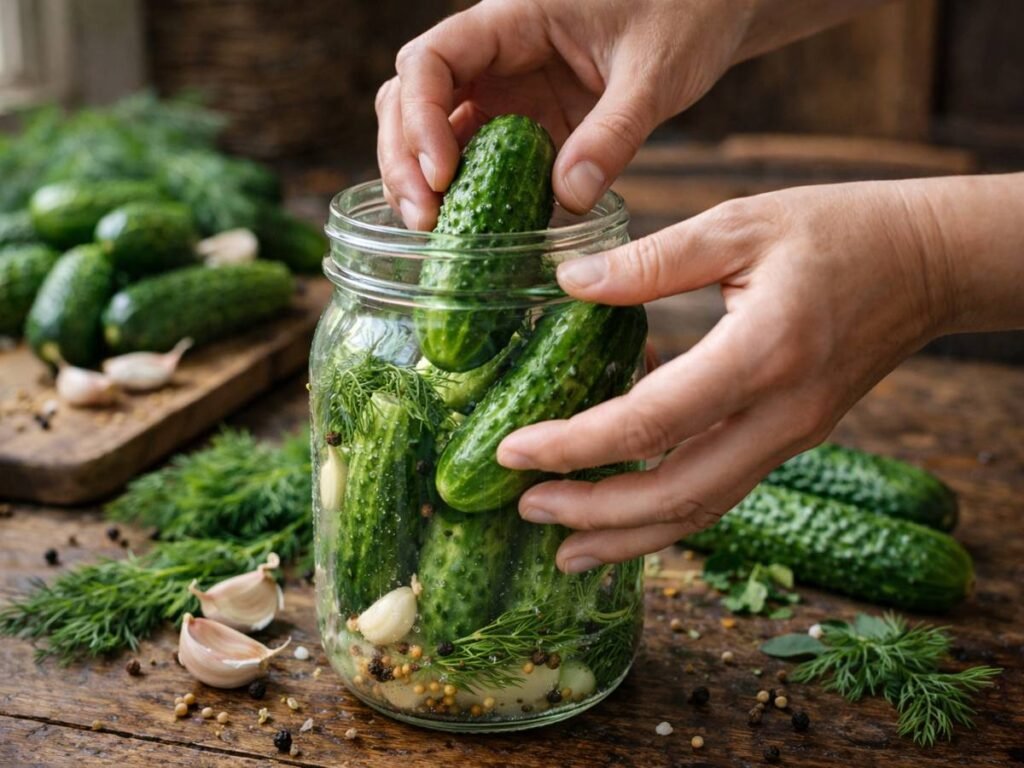
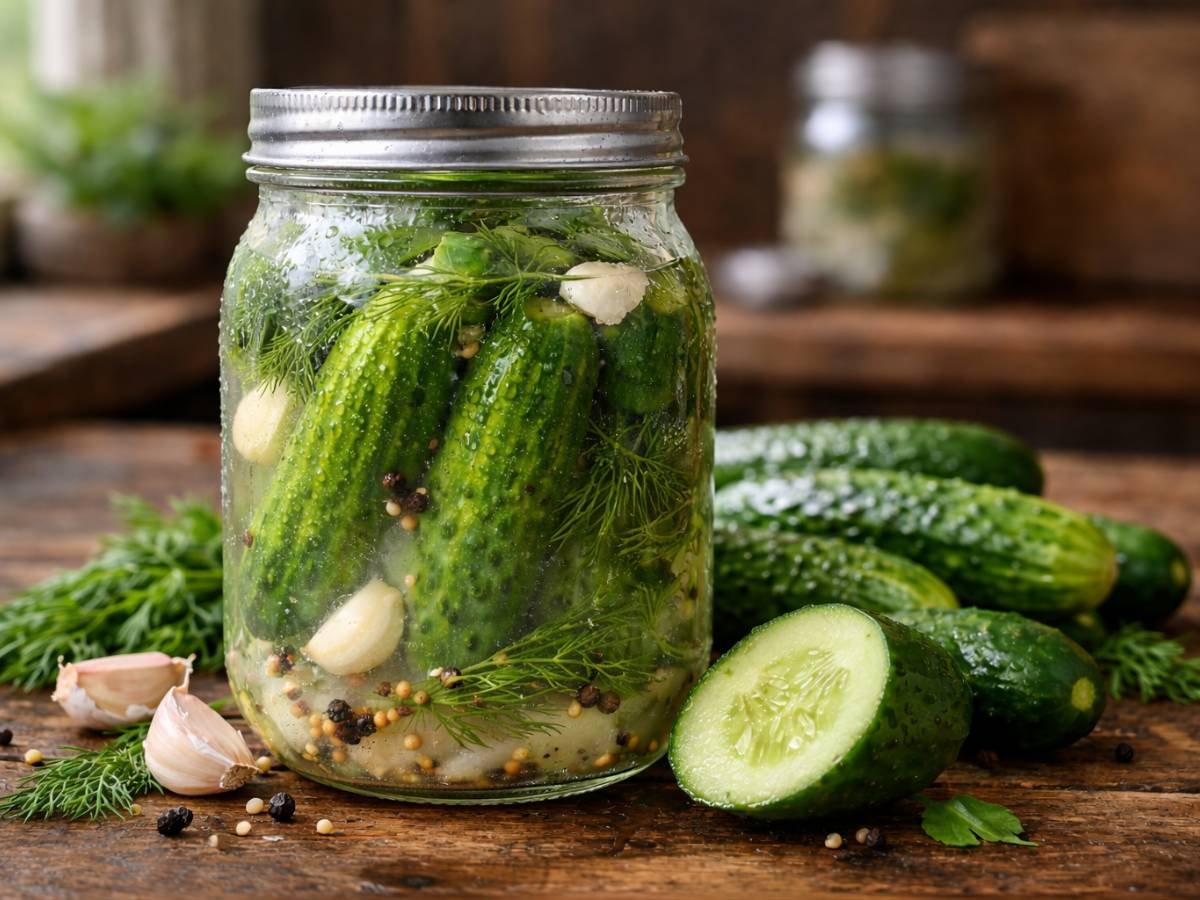
When I begin the pickling process, I rinse cucumbers carefully and pack them tightly into clean pickle jars. I layer dill, garlic cloves, and pickling spices between the vegetables to distribute flavor evenly. Preparing the salt brine involves dissolving kosher salt into water until completely clear.
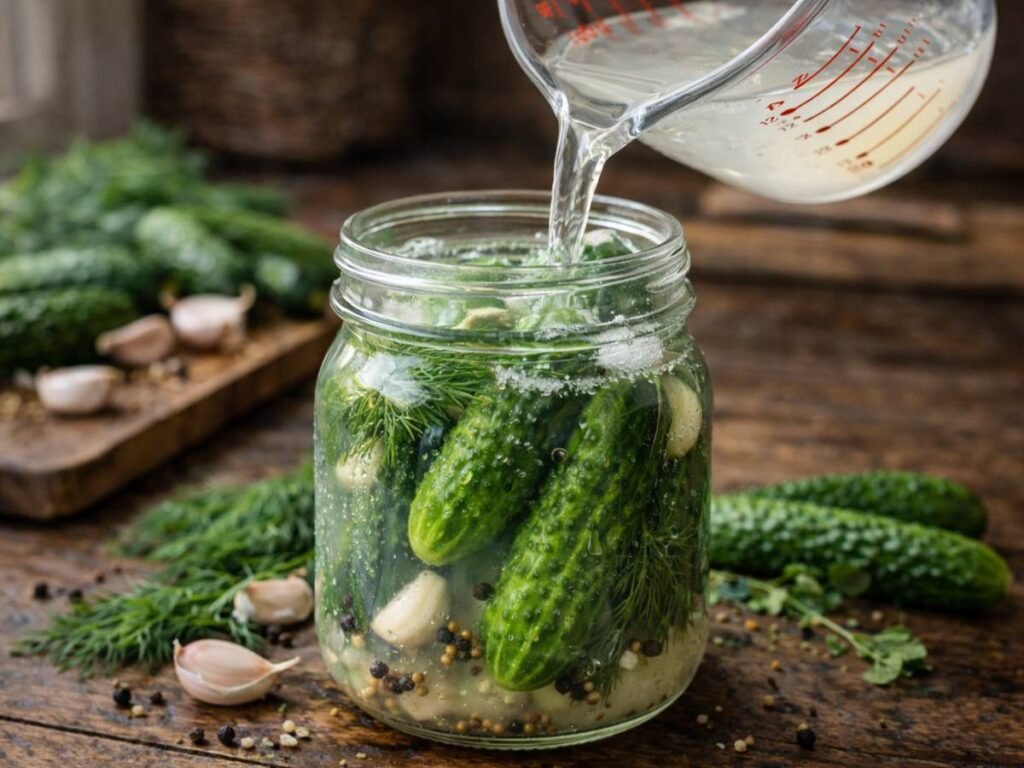
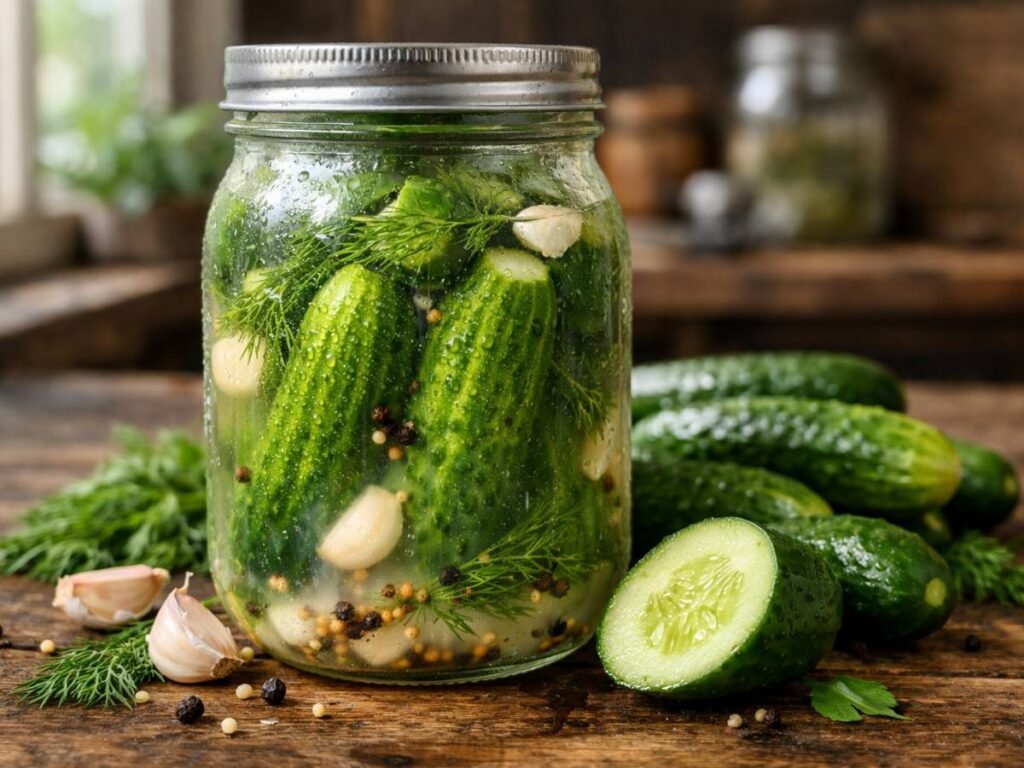
After pouring the brine over the cucumbers, I leave the jars loosely covered at room temperature to encourage fermentation. During this vegetable fermentation stage, beneficial bacteria develop probiotic compounds and enhance flavor. Within about two days, the cucumbers transform into crunchy half sour pickles with mild sour taste.
| Step | Action |
|---|---|
| 1 | Wash cucumbers thoroughly |
| 2 | Add dill, garlic, and spices to jars |
| 3 | Prepare salt brine |
| 4 | Pour brine over cucumbers |
| 5 | Ferment 24–48 hours |
Notes
Through years of experimenting with fermented vegetables, I learned several small adjustments that improve pickle quality. Using fresh cucumbers keeps the texture crisp, while cold water slows excessive fermentation. The balance of salt brine and dill dramatically shapes the sour taste profile.
Another important detail involves fermentation time. I usually taste the cucumbers after twenty-four hours to evaluate flavor development. If the pickles need stronger taste, I extend fermentation slightly. This flexibility allows home pickling to produce artisan pickles with consistent crunch and balanced flavor.
Nutrition Information:
Half sour pickles contain surprisingly beneficial nutrients because fermentation creates probiotics that support gut health. Cucumbers themselves contribute hydration, fiber, and minerals, while the brine preserves vegetables without heavy calories. These fermented foods remain a healthy snack option compared with processed condiments.
I often recommend half sour pickles as a refreshing side dish or appetizer with sandwiches and deli food. Their sour taste profile stimulates appetite while remaining low in fat. The natural fermentation process also enhances digestibility through beneficial bacteria associated with probiotic benefits.
| Nutrient | Approx Amount |
|---|---|
| Calories | 15 |
| Sodium | 350 mg |
| Fiber | 1 g |
| Vitamin K | 10% DV |
| Probiotics | Present |
Similar Recipes
Whenever I explore pickle making, I also experiment with other fermented vegetables and preservation techniques. Full sour pickles, refrigerator pickles, and garlic dill pickles all use similar brining solutions but vary in fermentation time. Each method creates different flavor profiles and textures.
I enjoy comparing these recipes because they demonstrate the versatility of cucumbers in food cultures worldwide. Some versions rely heavily on vinegar, while others emphasize natural fermentation. Exploring multiple pickle styles deepens understanding of food preservation and encourages creativity in homemade condiments.
Refrigerator Pickles Recipe
Sometimes I make refrigerator pickles when I want quick results without waiting for fermentation. This technique uses vinegar, water, salt, and spices to create crisp cucumbers within hours. Although the pickles lack probiotic benefits, they still deliver bright flavor and crunchy texture.
Refrigerator pickles remain popular in modern cooking because the method simplifies food preparation. The cucumbers absorb dill, garlic, and spices rapidly inside chilled pickle jars. While this approach differs from fermented foods, it still preserves vegetables effectively for snacks or side dishes.
| Feature | Fermented Pickles | Refrigerator Pickles |
|---|---|---|
| Method | Natural fermentation | Vinegar brine |
| Probiotics | Present | None |
| Flavor | Mild sour | Sharp tang |
| Time | 1–2 days | Few hours |
Half Sour Pickles
Half sour pickles hold a special place in traditional Jewish deli cuisine because their mild sour taste and crunchy texture complement sandwiches perfectly. I appreciate how fermentation enhances cucumbers while preserving their fresh produce character. The balance of dill, garlic, and salt brine defines this classic deli staple.
Over time I discovered that homemade half sour pickles outperform most store versions in flavor and freshness. Natural fermentation develops probiotics and subtle complexity impossible to replicate with vinegar alone. Whether served as snack foods, condiments, or side dish ideas, these pickles remain a timeless culinary tradition.
Explore more recipes
Chopped Almonds Asian Sauce Recipe
Liquid Maria Juana Drink Recipe
Heartumental Recipe Guide: Cooking That Feels Like Home
GAPS Cream Cheese Dessert Recipe (No-Bake, Grain-Free & Creamy)
Pharaoh Sauce Recipe: Ancient Taste Meets Modern Flavor

Half Sour Pickles Recipe (Classic Jewish Deli Style)
Ingredients
Equipment
Method
- Wash the cucumbers thoroughly with cold water and trim a tiny slice off the blossom end to keep the pickles crunchy.
- Place the cucumbers vertically inside clean mason jars. Add dill sprigs, crushed garlic cloves, pickling spices, peppercorns, and mustard seeds around the cucumbers.
- In a bowl, dissolve the kosher salt completely in the filtered water to create the brine.
- Pour the salt brine over the cucumbers until they are fully submerged. Leave about 1 inch of space at the top of the jar.
- Place a fermentation weight or small glass on top of the cucumbers so they stay below the brine.
- Cover the jar loosely with a lid or kitchen towel and let the pickles ferment at room temperature for 24–48 hours.
- Taste the pickles after one day. When they reach the mild sour flavor typical of half sour pickles, transfer the jar to the refrigerator.
- Refrigeration slows the fermentation and keeps the pickles crisp and fresh for up to 2 weeks.
Notes
Nutrition
Calories: 15Carbohydrates: 3g
Fiber: 1g
Protein: 1g
Fat: 0g
Sodium: 350mg
Vitamin K: 10% Daily Value
Keywords
half sour pickles recipe, homemade pickles, fermented cucumbers, dill pickles, garlic dill pickles, Jewish deli pickles, salt brine pickles, probiotic pickles, crunchy pickles, fermented foods recipe, refrigerator pickles, cucumber fermentation, healthy fermented vegetables, traditional pickle recipe, homemade fermented picklesRecipe Expert & Food Blogger
Meet Sarah Hasan – the heart and soul of Kitchen Pinch.As a passionate home chef with a wealth of culinary experience, Sarah specializes in crafting easy yet flavor-packed recipes that showcase comfort food, global dishes, copycat favorites, pasta, tacos, and more. Her simple approach makes cooking approachable and fun for all levels.
✔ Easy Comfort Food✔ Global Flavors & Fusion✔ Copycat Restaurant Dishes